Categories
Uncategorized

The Gardens of Three Pines: The Gardens of Gamache’s Paris

In Louise Penny’s 16th novel, All the Devils Are Here, Armand and Reine-Marie Gamache travel to Paris. There, they encounter two gardens that are worlds different from the green spaces of Three Pines: the hidden courtyard garden belonging to Armand’s Godfather, Stephen Horowitz, and the stately trees and sculptures of the gardens at the Musée Rodin.

Stephen Horowitz’s Courtyard

“Once in the courtyard, Gamache touched Beauvoir’s arm in a silent request to pause.
A single tree, thick-trunked, tall and gnarled, dominated the space.
Lace curtains fluttered at windows where boxes were planted with bright red geranium and soft blue pansies.
Even Beauvoir, not given to appreciating aesthetics, could appreciate this.
It was one of the many peculiarities of Paris. Hidden behind many of the simple wooden doors were these courtyards and secret gardens. It was a city of façades. Of beauty, both obvious and obscure. Of heroism, both obvious and obscure. Of dreadful deeds, both obvious and obscure.”All the Devils Are Here

  • Geranium: Named for the Greek word for “Crane” due to the flower’s supposed resemblance to the bill and head of the bird (I don’t see it!). Geraniums are symbols of good health and friendship.
  • Pansies: Derived from the French for “thought”, Pansies are a strong flower that can survive through Winter. A favorite among poets and writers, the plant appears in many works including those of Spenser, Hawthorne, and Wordsworth. Curiously, Margaret Mitchell originally named her most famous character, “Pansy O’Hara”…

The Musée Rodin Sculpture Garden

“Who’d have thought such a place existed anywhere, never mind tucked, essentially hidden, behind tall walls, in the middle of the city? It was a world unto itself. A magic garden.” – All the Devils Are Here

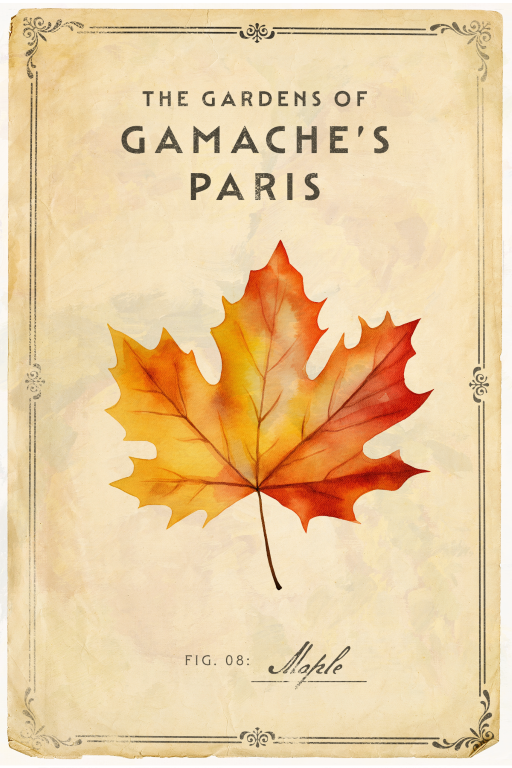
  • Maples: Maple fossils date back 60 million years! A national symbol of Canada where 10 species are native to the country. Maples are a favorite of Fall foliage viewers or “leaf peepers” as they’re sometimes referred to.
  • Lime Trees: Generally an ornamental plant, Lime trees are a favored wood among carvers and are often used in the construction of blinds. Herbally, the tree is beneficial in reducing stress, promoting sleep, and fighting colds.

Have you visited any notable gardens on your travels?

Categories
Uncategorized

The Gardens of Three Pines: The Gardens of Saint-Gilbert-Entre-les-Loups

Deep in the wilderness of Quebec lies the monastery of Saint-Gilbert-Entre-les-Loups, where two dozen cloistered monks live in silence and prayer. Although they’ve taken a vow of silence, the monks are world-famous for their singing voices, reciting chants so profound they produce an effect known as “the beautiful mystery” – the inspiration for the title of the eighth book in Louise Penny’s series.

When the monks aren’t singing, they’re making chocolate, tending to their chickens, and growing vegetables and medicinal herbs. Plants that might be found in each of the monastery gardens are listed below.

The Abbot’s Garden

“Gamache longed to walk around the abbot’s garden. No matter how tilled and weeded and pruned it was, that control was an illusion. There was no taming nature.” – The Beautiful Mystery

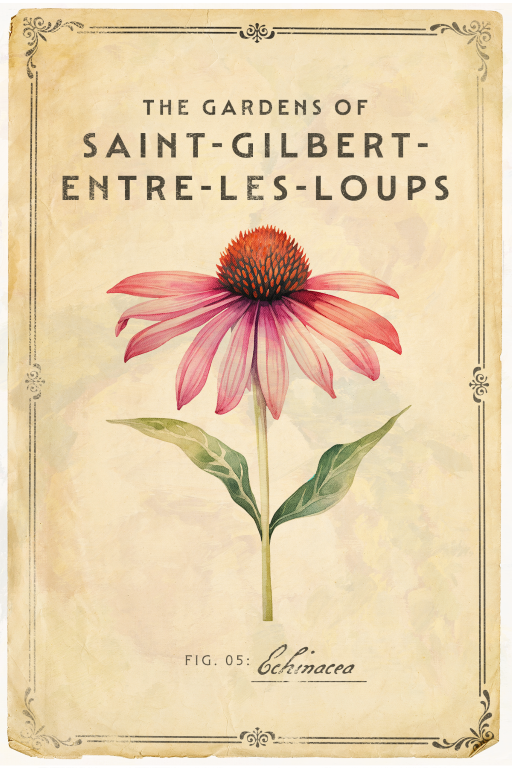
  • Echinacea: Native to North America and named for the Greek word for hedgehog, this medicinal plant is commonly used to treat colds, among other ailments.
  • Meadowsweet: Meadowsweet, or “Queen of the Meadow”, is prevalent in the United Kingdom and was a favorite potpourri of Queen Elizabeth I.
  • Chamomile: Widely known for its use in herbal teas, Chamomile can also be added as a flavoring ingredient in beer.

Vegetable Garden

“Jean-Guy looked at the garden. It was huge. Much, much bigger than the abbot’s garden. This was clearly a vegetable garden, whose main crop seemed to be massive mushrooms.” The Beautiful Mystery

  • Mushrooms: A fungus that comes in all shapes and sizes – some of which are poisonous – that can be used in many ways, including a vehicle to “turn on, tune in, drop out”.
  • Squash: A member of the Cucurbita family, along with gourds and pumpkins, that are known to attract “Squash” bees and come in a myriad of winter and summer varieties.
  • Carrots: A root vegetable that dates back to 3000 BC, consumption of which was once thought to improve night vision – they do not. But they are still a favorite of Bugs Bunny, who popularized the myth that rabbits naturally eat carrots – they do not.

What are some of your favorite medicinal herbs and vegetables?

Categories
Uncategorized

The Gardens of Three Pines: The Gardens of Manoir Bellechasse

Each summer, beginning when they were young, Reine-Marie and Armand Gamache visit Manoir Bellechasse, the beautiful, grand lodge built over a century ago on the shores of Lake Massawippi. Surrounded by mountains and forests – and gardens! – the lodge is a luxury, secluded destination for lovers of nature and good food.

“They knew if they looked in that same ledger they’d find their signatures, once a year, stretching back to a June day more than thirty years ago when young Armand had saved his money and brought Reine-Marie here. For one night. In the tiniest of rooms at the very back of the splendid old Manoir. Without a view of the mountains or the lake or the perennial gardens lush with fresh peonies and firstbloom roses. He’d saved for months, wanting that visit to be special. Wanting Reine-Marie to know how much he loved her, how precious she was to him.”A Rule Against Murder

Some flowers that might be found in Manoir Bellecasse’s manicured grounds include:

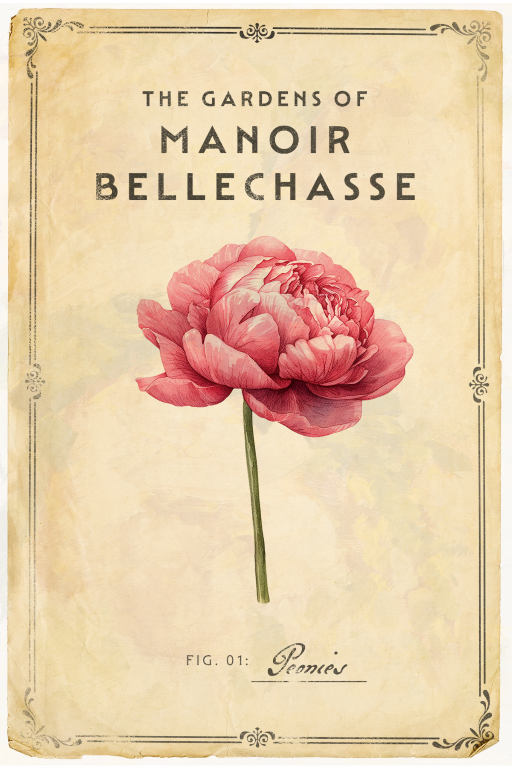
Peonies: While the number of peony species is unclear, this flowering plant is extremely popular in ornamental arrangements. The peony has a rich and long history in Eastern cultures and is the floral symbol of China.

Lilies: Mostly native to the Northern Hemisphere, the lily flowers in a bountiful spectrum of colors. Beware: certain types of lilies can be extremely dangerous for cats!

Honeysuckle: Known to attract Hummingbirds, especially in North America, Honeysuckle can be aromatic and is named for the nectar that they cultivate in their flowers. The plant has come to symbolize nostalgia and love.

Tell us about a memorable garden you’ve visited on your travels.

Categories
Uncategorized

The Gardens of Three Pines: The Gamache Garden

Although it feels like the Gamaches have always been part of the fabric of Three Pines, Armand and Reine-Marie don’t officially move to the village until the tenth book in the series, The Long Way Home. Their brick house sits on the edge of the Village Green, and their garden, located in the back of the house, becomes a place of peace and reflection for the Gamaches, along with a gathering place where they spend time with their family and friends.

“Reine-Marie stopped, stooped, and picked a weed out of their front garden. She showed it to Myrna, who clapped. It had become their running joke, from their early days in the village, when Reine-Marie and Armand had “weeded” the spring garden, only to discover they’d left the weeds and taken out most of the perennials.” Glass Houses

Perhaps not natural green thumbs, the Gamaches still grow a variety of flowers, weeds, and trees in their garden, including:

Lavender: An Old World flower that dates back, at the very least, to Greek and Roman times. “Lavender Haze” was a term coined in the 1950s to describe a certain state of love. Taylor Swift heard the phrase while watching an episode of Mad Men, which inspired her to pen the eponymous song.

Weeds: A generally undesirable plant that dates back to the invention of agriculture. A.A. Milne famously quipped in Winnie-the-Pooh, “Weeds are plants too, once you get to know them.”

Apple Trees: Also known as Malus domestica, were originally cultivated in Asia and subsequently brought to America by colonists. William Blaxton, the first European settler to occupy what is today known as Boston, grew the first apples and named them “Yellow Sweeting”.

Do you have any tips for managing weeds in your garden?

Categories
Uncategorized

The Gardens of Three Pines: Miss Jane Neal’s Garden

There’s no better introduction to the “Gardens of Three Pines” than Miss Jane Neal’s. Jane, a retired schoolteacher, is famously the first murder victim in Louise’s beloved and bestselling series. Her garden provides a window into the type of person she was – and the community of Three Pines where she lived.

“‘One more question,’ said Gamache at the door, the bag of muffins in one hand and the door handle in the other. ‘You mentioned the Charles de Mills rose.’
‘Jane’s favorite. He’s not just any rose, Chief Inspector. He’s considered by rosarians to be one of the finest in the world. An old garden rose. Only blooms once a season but with a show that’s spectacular. And then it’s gone.’”Still Life

Jane was known for her particular fondness for “old garden roses,” which she tended with expert care, and her favorite, the Charles de Mills rose. Beyond the roses, her garden was a riot of color and variety, featuring:

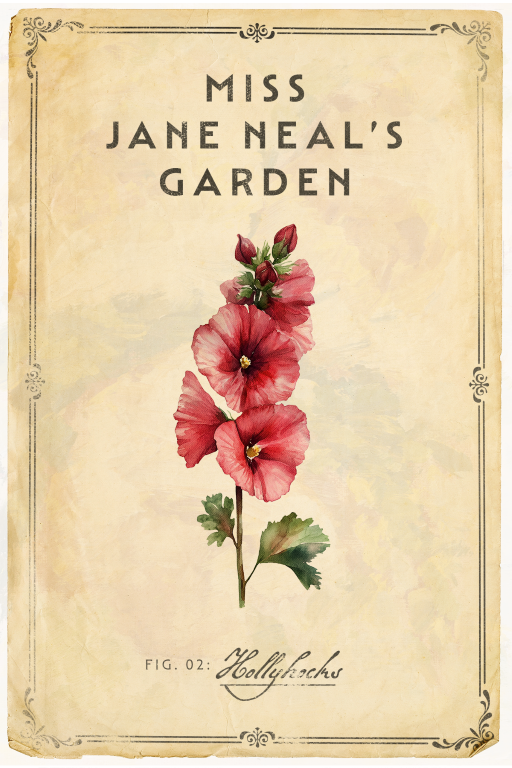
  • Hollyhocks: Of the Alcea genus, hollyhock is generally found in Asia and Europe. The Streambank Wild Hollyhock is native to North America.
  • Sweet Bergamot (Monarda): A mint that is indigenous to North America. The Native Americans used its medicinal qualities to cure stomach ailments, among other ailments.
  • Charles de Mills Rose: An Old Garden Rose, first introduced in 1786, the Charles de Mills rose is known for its vibrant purple and crimson hues. The Charles de Mills was inducted into the Old Rose Hall of Fame in 2015.

Tell us about your garden?

The owner of this website has made a commitment to accessibility and inclusion, please report any problems that you encounter using the contact form on this website. This site uses the WP ADA Compliance Check plugin to enhance accessibility.