Categories
Uncategorized

The Gardens of Three Pines: The Gardens of Gamache’s Paris

In Louise Penny’s 16th novel, All the Devils Are Here, Armand and Reine-Marie Gamache travel to Paris. There, they encounter two gardens that are worlds different from the green spaces of Three Pines: the hidden courtyard garden belonging to Armand’s Godfather, Stephen Horowitz, and the stately trees and sculptures of the gardens at the Musée Rodin.

Stephen Horowitz’s Courtyard

“Once in the courtyard, Gamache touched Beauvoir’s arm in a silent request to pause.
A single tree, thick-trunked, tall and gnarled, dominated the space.
Lace curtains fluttered at windows where boxes were planted with bright red geranium and soft blue pansies.
Even Beauvoir, not given to appreciating aesthetics, could appreciate this.
It was one of the many peculiarities of Paris. Hidden behind many of the simple wooden doors were these courtyards and secret gardens. It was a city of façades. Of beauty, both obvious and obscure. Of heroism, both obvious and obscure. Of dreadful deeds, both obvious and obscure.”All the Devils Are Here

  • Geranium: Named for the Greek word for “Crane” due to the flower’s supposed resemblance to the bill and head of the bird (I don’t see it!). Geraniums are symbols of good health and friendship.
  • Pansies: Derived from the French for “thought”, Pansies are a strong flower that can survive through Winter. A favorite among poets and writers, the plant appears in many works including those of Spenser, Hawthorne, and Wordsworth. Curiously, Margaret Mitchell originally named her most famous character, “Pansy O’Hara”…

The Musée Rodin Sculpture Garden

“Who’d have thought such a place existed anywhere, never mind tucked, essentially hidden, behind tall walls, in the middle of the city? It was a world unto itself. A magic garden.” – All the Devils Are Here

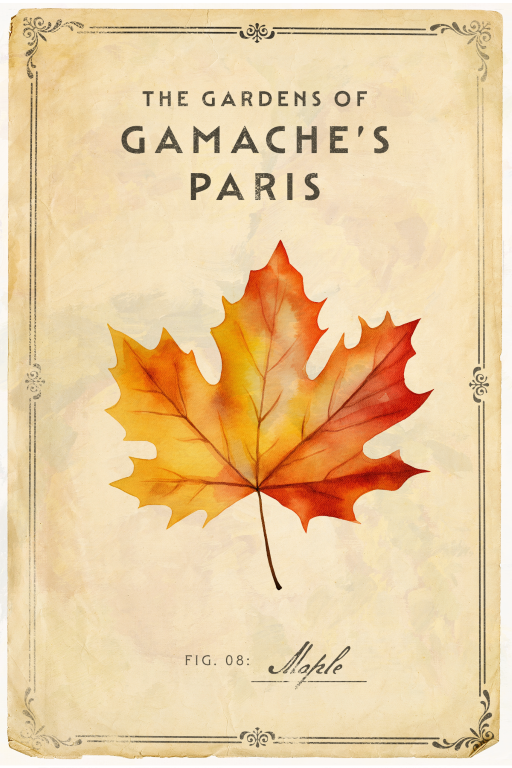
  • Maples: Maple fossils date back 60 million years! A national symbol of Canada where 10 species are native to the country. Maples are a favorite of Fall foliage viewers or “leaf peepers” as they’re sometimes referred to.
  • Lime Trees: Generally an ornamental plant, Lime trees are a favored wood among carvers and are often used in the construction of blinds. Herbally, the tree is beneficial in reducing stress, promoting sleep, and fighting colds.

Have you visited any notable gardens on your travels?

Categories
Uncategorized

The Gardens of Three Pines: The Gardens of Saint-Gilbert-Entre-les-Loups

Deep in the wilderness of Quebec lies the monastery of Saint-Gilbert-Entre-les-Loups, where two dozen cloistered monks live in silence and prayer. Although they’ve taken a vow of silence, the monks are world-famous for their singing voices, reciting chants so profound they produce an effect known as “the beautiful mystery” – the inspiration for the title of the eighth book in Louise Penny’s series.

When the monks aren’t singing, they’re making chocolate, tending to their chickens, and growing vegetables and medicinal herbs. Plants that might be found in each of the monastery gardens are listed below.

The Abbot’s Garden

“Gamache longed to walk around the abbot’s garden. No matter how tilled and weeded and pruned it was, that control was an illusion. There was no taming nature.” – The Beautiful Mystery

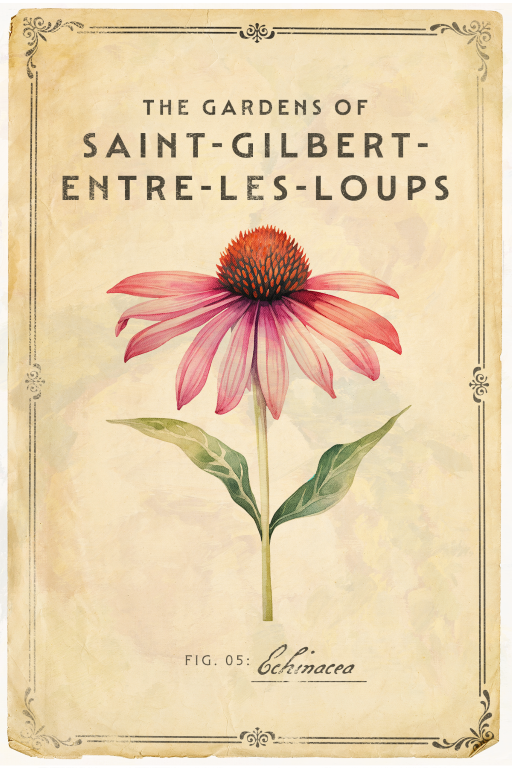
  • Echinacea: Native to North America and named for the Greek word for hedgehog, this medicinal plant is commonly used to treat colds, among other ailments.
  • Meadowsweet: Meadowsweet, or “Queen of the Meadow”, is prevalent in the United Kingdom and was a favorite potpourri of Queen Elizabeth I.
  • Chamomile: Widely known for its use in herbal teas, Chamomile can also be added as a flavoring ingredient in beer.

Vegetable Garden

“Jean-Guy looked at the garden. It was huge. Much, much bigger than the abbot’s garden. This was clearly a vegetable garden, whose main crop seemed to be massive mushrooms.” The Beautiful Mystery

  • Mushrooms: A fungus that comes in all shapes and sizes – some of which are poisonous – that can be used in many ways, including a vehicle to “turn on, tune in, drop out”.
  • Squash: A member of the Cucurbita family, along with gourds and pumpkins, that are known to attract “Squash” bees and come in a myriad of winter and summer varieties.
  • Carrots: A root vegetable that dates back to 3000 BC, consumption of which was once thought to improve night vision – they do not. But they are still a favorite of Bugs Bunny, who popularized the myth that rabbits naturally eat carrots – they do not.

What are some of your favorite medicinal herbs and vegetables?

Categories
Uncategorized

The Gardens of Three Pines: The Gardens of Manoir Bellechasse

Each summer, beginning when they were young, Reine-Marie and Armand Gamache visit Manoir Bellechasse, the beautiful, grand lodge built over a century ago on the shores of Lake Massawippi. Surrounded by mountains and forests – and gardens! – the lodge is a luxury, secluded destination for lovers of nature and good food.

“They knew if they looked in that same ledger they’d find their signatures, once a year, stretching back to a June day more than thirty years ago when young Armand had saved his money and brought Reine-Marie here. For one night. In the tiniest of rooms at the very back of the splendid old Manoir. Without a view of the mountains or the lake or the perennial gardens lush with fresh peonies and firstbloom roses. He’d saved for months, wanting that visit to be special. Wanting Reine-Marie to know how much he loved her, how precious she was to him.”A Rule Against Murder

Some flowers that might be found in Manoir Bellecasse’s manicured grounds include:

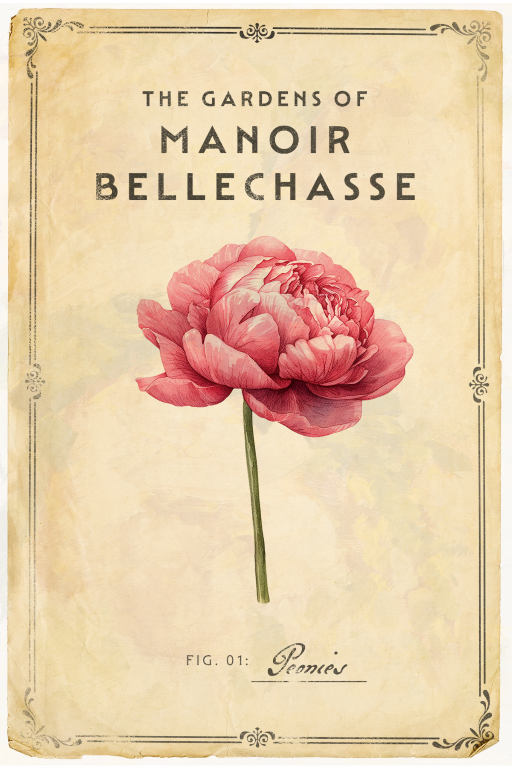
Peonies: While the number of peony species is unclear, this flowering plant is extremely popular in ornamental arrangements. The peony has a rich and long history in Eastern cultures and is the floral symbol of China.

Lilies: Mostly native to the Northern Hemisphere, the lily flowers in a bountiful spectrum of colors. Beware: certain types of lilies can be extremely dangerous for cats!

Honeysuckle: Known to attract Hummingbirds, especially in North America, Honeysuckle can be aromatic and is named for the nectar that they cultivate in their flowers. The plant has come to symbolize nostalgia and love.

Tell us about a memorable garden you’ve visited on your travels.

Categories
Uncategorized

The Gardens of Three Pines: The Gamache Garden

Although it feels like the Gamaches have always been part of the fabric of Three Pines, Armand and Reine-Marie don’t officially move to the village until the tenth book in the series, The Long Way Home. Their brick house sits on the edge of the Village Green, and their garden, located in the back of the house, becomes a place of peace and reflection for the Gamaches, along with a gathering place where they spend time with their family and friends.

“Reine-Marie stopped, stooped, and picked a weed out of their front garden. She showed it to Myrna, who clapped. It had become their running joke, from their early days in the village, when Reine-Marie and Armand had “weeded” the spring garden, only to discover they’d left the weeds and taken out most of the perennials.” Glass Houses

Perhaps not natural green thumbs, the Gamaches still grow a variety of flowers, weeds, and trees in their garden, including:

Lavender: An Old World flower that dates back, at the very least, to Greek and Roman times. “Lavender Haze” was a term coined in the 1950s to describe a certain state of love. Taylor Swift heard the phrase while watching an episode of Mad Men, which inspired her to pen the eponymous song.

Weeds: A generally undesirable plant that dates back to the invention of agriculture. A.A. Milne famously quipped in Winnie-the-Pooh, “Weeds are plants too, once you get to know them.”

Apple Trees: Also known as Malus domestica, were originally cultivated in Asia and subsequently brought to America by colonists. William Blaxton, the first European settler to occupy what is today known as Boston, grew the first apples and named them “Yellow Sweeting”.

Do you have any tips for managing weeds in your garden?

Categories
Uncategorized

The Gardens of Three Pines: Miss Jane Neal’s Garden

There’s no better introduction to the “Gardens of Three Pines” than Miss Jane Neal’s. Jane, a retired schoolteacher, is famously the first murder victim in Louise’s beloved and bestselling series. Her garden provides a window into the type of person she was – and the community of Three Pines where she lived.

“‘One more question,’ said Gamache at the door, the bag of muffins in one hand and the door handle in the other. ‘You mentioned the Charles de Mills rose.’
‘Jane’s favorite. He’s not just any rose, Chief Inspector. He’s considered by rosarians to be one of the finest in the world. An old garden rose. Only blooms once a season but with a show that’s spectacular. And then it’s gone.’”Still Life

Jane was known for her particular fondness for “old garden roses,” which she tended with expert care, and her favorite, the Charles de Mills rose. Beyond the roses, her garden was a riot of color and variety, featuring:

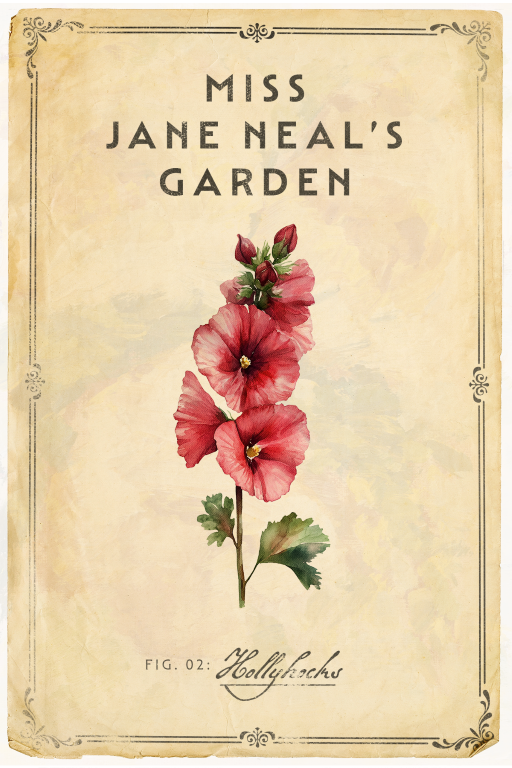
  • Hollyhocks: Of the Alcea genus, hollyhock is generally found in Asia and Europe. The Streambank Wild Hollyhock is native to North America.
  • Sweet Bergamot (Monarda): A mint that is indigenous to North America. The Native Americans used its medicinal qualities to cure stomach ailments, among other ailments.
  • Charles de Mills Rose: An Old Garden Rose, first introduced in 1786, the Charles de Mills rose is known for its vibrant purple and crimson hues. The Charles de Mills was inducted into the Old Rose Hall of Fame in 2015.

Tell us about your garden?

Categories
Uncategorized

The People of Three Pines: Jean-Guy Beauvoir

At thirty-five years old, Jean Guy Beauvoir had been Gamache’s second in command for more than a decade. He wore cords and a wool sweater under his leather jacket. A scarf was rakishly and apparently randomly whisked around his neck. It was a look of studied nonchalance which suited his toned body but was easily contradicted by the cord-tight tension of his stance. Jean Guy Beauvoir was loosely wrapped but tightly wound. – Still Life

Jean Guy Beauvoir was constantly at war with himself, at odds over his need to wear clothes that showed off his slender, athletic build, and his need not to freeze his tight ass off. It was nearly impossible to be both attractive and warm in a Quebec winter. And Jean Guy Beauvoir sure didn’t want to look like a dork in a parka and stupid hat. – A Fatal Grace

Then the Chief Inspector had found him, taken him onto homicide and a few years later promoted him to inspector and his second in command. But Jean Guy Beauvoir never totally left the cage. Instead it had moved inside and in it he kept the worst of his rage, where it couldn’t cause damage. And beside that cage sat another, quieter cage. In it, curled up in a corner, was something that frightened him far more than his fury. Beauvoir lived in terror that one day the creature in there would escape. – The Cruelest Month

Inspector Jean Guy Beauvoir stepped out of the car and looked at the sky. Unremitting gray. It would rain for a while yet. He looked down at his shoes. Leather. His slacks designer. His shirt. Casual linen. Perfect. Fucking middle of nowhere murder. In the rain. And mud. He slapped his cheek. And bugs. Flattened to his palm were the remains of a mosquito and some blood. Fucking perfect. Agent Isabelle Lacoste opened an umbrella and offered him one. He declined. Bad enough to be here, he didn’t need to look like Mary Poppins. – A Rule Against Murder

Chief Inspector Armand Gamache got the call just as he and Reine-Marie finished clearing up after Sunday brunch. In the dining room of their apartment in Montreal’s Outremont quartier he could hear his second in command, Jean Guy Beauvoir, and his daughter Annie. They weren’t talking. They never talked. They argued. Especially when Jean Guy’s wife, Enid, wasn’t there as a buffer. – The Brutal Telling

Every hour of every day Jean-Guy Beauvoir searched for not just facts, but truth. He hadn’t appreciated, though, how terrifying it was being with someone who spoke it, all the time. – Bury Your Dead

Since his separation from Enid, Jean Guy had seemed distant. Aloof. He’d never been exactly exuberant but Beauvoir was quieter than ever these days, as though his walls had grown and thickened. And his narrow drawbridge had been raised. – A Trick of the Light

Jean-Guy Beauvoir loved his job. But now, for the first time, he looked into the kitchen, and saw Annie standing in the doorway. Watching him. And he realized, with surprise, that he now loved something more. – The Beautiful Mystery

Beauvoir liked lists. Gamache liked thoughts, ideas. Beauvoir liked to question, Gamache liked to listen. And yet there was a bond between the older man and the younger that seemed to reach through time. They held a natural, almost ancient, place in each other’s lives. Made all the more profound when Jean-Guy Beauvoir fell in love with Annie, the Chief’s daughter. – How the Light Gets In

Late into his thirties, with a broken body and a shattered spirit, Jean-Guy Beauvoir had been seduced by happiness. – The Long Way Home

Out on the green, Lacoste’s two children were fighting with Jean-Guy Beauvoir for the ball. The grown man appeared to be sincerely, and increasingly desperately, trying to control the play. Lacoste smiled. Even against kids, Inspector Beauvoir did not like to lose. – The Nature of the Beast

Inspector Jean-Guy Beauvoir knew that his mountain analogy with Gamache had been wrong. If you died on the side of a mountain, it was in the middle of a selfish, meaningless act. A feat of strength and ego, wrapped in bravado. – A Great Reckoning

He’d known Jean-Guy long before he’d become his son-in-law, having hired Agent Beauvoir away from a dead-end job guarding evidence. He’d taken a young man no one else wanted and made him an inspector in homicide, to everyone’s surprise. But it had seemed natural, to Gamache. He barely had to think about it. They were chief and agent. Patron and protégé. They were the head and the heart. Now father-in-law and son-in-law. Father and son. They had been thrown together, joined together, it seemed, for this lifetime, and many past. – Glass Houses

Beauvoir walked briskly to the subway and what he knew would be the final internal-affairs interview before all returned to normal. His head was down, and he concentrated on the sidewalk and the soft, light snow hiding the ice below. One misstep and bad things happened. A turned ankle. A wrist broken trying to break the fall. Or a fractured skull. It was always what you couldn’t see that hurt you. – Kingdom of the Blind

When Jean-Guy Beauvoir had arrived twenty minutes earlier, he’d gone directly to his office and closed the door. It wasn’t something he normally did. Normally his door was wide open. Normally he went straight to the conference room. Normally he was the only Chief Inspector of homicide there. But this was not a normal day. How the next half hour or so went would set the tone going forward. – A Better Man

And then Jean-Guy arrived. Agent Beauvoir. Found in some basement Sûreté servitude. Angry, arrogant. One insult away from being fired from the detachment and booted out of the service. Chief Inspector Gamache had recognized something in the young man. And had, to everyone’s astonishment, not least Agent Beauvoir’s, brought him into homicide. The most sought after, the most prestigious department in the Sûreté du Québec. Armand had become Jean-Guy’s mentor. And more. Jean-Guy had risen to become Armand’s second-in-command. And more. And Daniel had never forgiven either. – All the Devils Are Here

Jean-Guy’s dark hair had some gray now, and a few lines had appeared on his handsome face. His complexion was rosy after a day in the bright sun and gusty wind. Though he’d made it clear he preferred “rugged” to “rosy.” – The Madness of Crowds

While Gamache had become an explorer of human emotions, Jean-Guy Beauvoir was the hunter. They were a perfect, though unequal, team. Watching his father-in-law toss a slimy tennis ball to Henri the German shepherd, Jean-Guy was under no illusions who was the leader. He’d follow him anywhere. And had. – A World of Curiosities

Annie and Jean-Guy lived close to the Gamaches’ pied-à-terre in the Outremont quartier of Montréal. Though the young couple and their two children lived in the less swanky Mile End neighborhood. – The Grey Wolf


Though their relationship has changed and evolved over the years, Jean-Guy Beauvoir is both Armand Gamache’s second-in-command and son-in-law – and the “hunter” to Gamache’s “explorer”. Do you think these excerpts capture Jean-Guy’s character? What else would you add?

Categories
Uncategorized

The People of Three Pines: Ruth Zardo

As far as she knew, Ruth had always been like this. ‘Then why does everyone like her?’ Myrna had asked. Clara had laughed and shrugged, ‘You know there are days I ask myself the same thing. What a piece of work that woman can be. But she’s worth the effort, I think.’ – Still Life

‘You’re wrong there,’ said Ruth, following Myrna’s gaze. ‘This used to be my drug of choice. In my teens my drug of choice was acceptance, in my twenties it was approval, in my thirties it was love, in my forties it was Scotch. That lasted a while,’ she admitted. ‘Now all I really crave is a good bowel movement.’ – A Fatal Grace

There was Ruth on the village green, talking to someone. Only she was alone. There was nothing odd about that. It actually would have been strange had there been someone willing to listen to her. – The Cruelest Month

Peter listened as Clara talked again about Fortin visiting her studio this past spring and seeing the portrait of their friend Ruth Zardo, the old and withered poet. Embittered and embattled and brilliant. – A Rule Against Murder

Standing like a ramrod beside them and staring unblinking at the bistro was Ruth Zardo. And her duck, looking quite imperious. Ruth wore a sou’wester that glistened in the rain. Clara spoke to her, but was ignored. Ruth Zardo, Gamache knew, was a drunken, embittered old piece of work. Who also happened to be his favorite poet in the world. Clara spoke again and this time Ruth did respond. Even through the glass Gamache knew what she’d said. “Fuck off.” – The Brutal Telling

Ruth appeared at Beauvoir’s chair, a scowl on her deeply wrinkled face. Her cropped white hair lay flat on her head, looking like exposed skull. She was tall and stooped and walked with a cane. The only good news was that she wasn’t in her nightgown. – Bury Your Dead

He’d actually been looking forward to seeing Ruth again. He examined the tall, thin, elderly woman leaning on her cane. Ruth’s hair was white and thin and cut close to her head, so that it looked like her skull was exposed. Which seemed to Beauvoir about right. Nothing inside Ruth’s head was ever unexposed or unexpressed. It was her heart she kept hidden. – A Trick of the Light

HOW THE LIGHT GETS IN

It was supposed to be just the three of them, which was bad enough, but then Ruth Zardo and her duck had arrived and the evening went from bad to a fiasco. Rosa, the duck, had muttered what sounded like “Fuck, fuck, fuck” the whole night, while Ruth had spent the evening drinking, swearing, insulting and interrupting. – How the Light Gets In

Below them, Ruth Zardo limped from her run- down cottage, followed by Rosa, her duck. The elderly woman looked around, then glanced up the dirt road out of town. Up, up the dusty path, Gamache could see her old steel eyes travel. Until they met his. And locked on. – The Long Way Home

The long, low brick building across the Rivière Bella Bella from the village was the home of the Three Pines Volunteer Fire Brigade, of which Ruth Zardo was the chief, being familiar, everyone figured, with hellfire. – The Nature of the Beast

Ruth loved words and used them intentionally. Even the thoughtless words were used with thought. – A Great Reckoning

There was a growing resemblance between Ruth and Rosa. Both had scrawny necks. Their heads white. Their eyes beady. They waddled when they walked. They shared a vocabulary. If it wasn’t for Ruth’s cane they’d be almost indistinguishable. – Glass Houses

Ruth Zardo. A gifted poet. One of the most distinguished in the nation. But that gift had come wrapped in more than a dollop of crazy. The name Ruth Zardo was uttered with equal parts admiration and dread. Like conjuring a magical creature that was both creative and destructive. – Kingdom of the Blind

Myrna Landers heaved a sigh and shifted her considerable weight in her armchair. As much as she longed to contradict Ruth, she couldn’t. The fact was, their drunk and disorderly old neighbor in Three Pines was a brilliant poet. Though not much of a human being. – A Better Man

Ruth made a noise that could have been a laugh. Or indigestion. – A Better Man

Ruth Zardo, Stephen’s friend, was also their close friend and neighbor in their Québec village of Three Pines. An elderly poet, she was embittered, often drunk. Definitely nuts. And brilliant.

You were a moth
brushing against my cheek
in the dark
I killed you
not knowing you were only a moth,
with no sting.


She and Stephen had proven a good match and fast friends. And while often angry, she was no devil. Perhaps, he’d often thought, just the opposite. – All the Devils Are Here

“Drink?” he said, handing Clara one of the glasses of spiked punch.
“Merci.”
He gave the other to Reine-Marie.
“What about me?” demanded Ruth.
He looked at the vat of scotch the old poet was gripping. He recognized it. It was actually a flower vase. From their home. – The Madness of Crowds

So many summer evenings sitting on the dilapidated front porch of the ramshackle house, Ruth in her rocker, her cane across her lap. In another era it would have been a shotgun, thought Harriet. And she’d have had a corncob pipe. Rosa, the mad duck, would hop up and settle on Harriet’s lap. Exhausted after a day of terrorizing the villagers. “Fuck, fuck, fuck,” one of them muttered, though it wasn’t always clear which one. – A World of Curiosities

Ruth Zardo. The poet. The laureate. Who from her ramshackle home in this little lost village managed to see things others did not.

Now here’s a good one:
you’re lying on your deathbed.
You have one hour to live.
Who is it, exactly, you have needed
all these years to forgive?


She was one of Armand’s favorite poets, if not favorite people. Though he had to admit, she was close there too. – The Grey Wolf

The brilliant poet Ruth Zardo – and her pet duck, Rosa – are two fan-favorite characters in the world of Three Pines. Do these excerpts from Louise’s novels, describing Ruth and sampling her poetry, encapsulate this unforgettable character? Is there anything you’d add?
Categories
Uncategorized

The People of Three Pines: Gabri Dubeau + Olivier Brulé

Gabri arrived with Szechwan take-out. He’d heard rumors of the activity and wanted desperately to see for himself. He’d even rehearsed. The huge man, made even more enormous by his coat and scarves, swept into the room. Stopping dead in the center, and making sure he held his audience, he looked around and declared, ‘Either that wallpaper goes, or I do.’ – Still Life

There were Gabri Dubeau and his partner Olivier Brulé. Gabri large and soft and clearly going to pot and loving every mouthful of it. He was in his mid-thirties and had decided he’d had enough of being young and buff and gay. Well, not really enough of being gay. Beside him stood Olivier, handsome and slim and elegant. Blond to his partner’s dark, he was picking a distressing strand of hair from his silk turtleneck, clearly wishing he could stick it back in. – A Fatal Grace

Olivier was constantly surprised by Gabri. His unexpected depth and his profound silliness. Olivier shook his head and went back to bed, trusting that in the morning all the evil spirits and the croissants would be gone. Wasn’t that why he and Olivier had decided to move here? Partly to get away from the mountain of crap they’d created in their old lives, but mostly to live in a place where kindness trumped cleverness. – The Cruelest Month

“Félicitations,” smiled Olivier. Where Gabri was large, effusive, unkempt, Olivier was immaculate and restrained. Both in their mid-thirties, they’d moved to Three Pines to lead a less stressful life. – A Rule Against Murder

He leaned in to his partner, seeing the precious thinning hair lying across the pillow and across the face. The eyes closed, peaceful. Gabri smelled Olivier, musky, slightly sweaty. Soon they’d have a shower and they’d both smell like Ivory soap. – The Brutal Telling

That was how Gabri and his partner Olivier had found Three Pines. Not intending to. They had other, grander, plans for their lives but once they’d laid eyes on the village, with its fieldstone cottages, and clap-board homes, and United Empire Loyalist houses, its perennial beds of roses and delphiniums and sweet peas, its bakery, and general store, well, they’d never left. Instead of taking New York, or Boston or even Toronto by storm they’d settled into this backwater. And never wanted to leave. – Bury Your Dead

Olivier looked at his partner, with his cheery white and red heart-shaped apron. The one he’d begged Gabri not to buy for Valentine’s Day two years ago. Had begged him not to wear. Had been ashamed of, and prayed no one they knew from Montréal visited and saw Gabri in such a ridiculous outfit. But now Olivier loved it. Didn’t want him to change it. Didn’t want him to change anything. – A Trick of the Light

Olivier and Gabri were walking over from the B and B, and met them on the road.
“It’s a gay blizzard,” said Ruth. “I used to be as pure as the driven snow,” Gabri confided in Constance. “Then I drifted.” – How the Light Gets In

Reine-Marie Gamache sat in her habitual seat. She hadn’t meant to make it a habit, it just happened. For the first few weeks after she and Armand had moved to Three Pines, they’d taken different seats at different tables. And each seat and table really was different. Not simply the location in the old bistro, but the style of furniture. All antiques, all for sale, with price tags hanging from them. Some were old Québec pine, some were overstuffed Edwardian armchairs and wing chairs. There was even a smattering of mid-century modern pieces. Sleek and teak and surprisingly comfortable. All collected by Olivier and tolerated by his partner, Gabri. As long as Olivier kept his finds in the bistro and left the running, and decorating, of the bed and breakfast to Gabri. – The Long Way Home

Gabri, large and voluble, walked across the bistro he owned with his partner, Olivier. – The Nature of the Beast

Olivier and his partner, Gabri, had turned an abandoned hardware store into the bistro many years ago, and in updating the electricity and plumbing, they’d opened the walls and found all sorts of things. Mummified squirrels, clothing. But mostly they’d found papers. Newspapers, magazines, advertisements, catalogues used as insulation as though words could keep winter at bay. – A Great Reckoning

Armand had, with Olivier’s help, borrowed Gabri’s signature bright pink fluffy slippers and a kimono. It was an easy, and extremely comfortable, costume. – Glass Houses

“There is only one chef,” Anton had confided in Myrna one day while buying vintage cookbooks at her shop. “But Olivier likes to make it sound like there’s a fleet of them.” Myrna laughed. Sounded like Olivier. Always trying to impress, even people who knew him too well for that. – Glass Houses

Lunch arrived. Clara and Myrna had both ordered the halibut, with mustard seeds, curry leaves, and grilled tomato. And for Gabri, his partner, Olivier, had made grouse with roasted figs and cauliflower puree. – Kingdom of the Blind

“Thought you could use some help,” said Olivier, above the roar of the water. “To look at a river?”
“Okay, some company.”
On seeing the expression on Armand’s face,
Olivier amended that. “Okay, it was time to do dishes.”
Armand laughed. Knowing that in fact Olivier had come out into the frigid night to offer help. In case. – A Better Man

Gabri had decided not to wear his frilly pink apron, the one he put on just to annoy Olivier, who still wanted to pass as straight. – The Madness of Crowds

Olivier took a few steps into the Old Train Station and Gabri followed. The men were very familiar with the large open space. It was home to their volunteer fire department. Both were members, and Ruth was the chief. Self-appointed, admittedly. But being essentially a dumpster fire herself, she was familiar with flames. – A World of Curiosities

It was comfortable and comforting. A relaxed marriage of the traditional and contemporary. Much like Olivier and Gabri themselves. – The Grey Wolf


Gabri and Olivier – the owners of the Bistro and the B&B – are partners, a study in contrasts who complement each other perfectly. Do these excerpts capture these two Three Pines residents? What traits or descriptions would you add?
Categories
Uncategorized

The People of Three Pines: Clara Morrow

Throughout Louise’s novels, Clara is depicted as a gifted, genuine artist, and a complex and evolving character. What characteristics come to mind when you think about Clara?

For many years Clara would remember how it felt standing there. Feeling again like the ugly little girl in the schoolyard. The unloved and unlovable child. – Still Life

‘They’re marvelous, Clara. They radiate.’ He turned to look at her in astonishment, as though meeting the woman for the first time. He’d known she was insightful, and courageous and compassionate. But he hadn’t appreciated that she was this gifted. – A Fatal Grace

Without asking for it she’d become the heart of their community. Small, middle-aged and getting a little plump, Clara was that rare combination: she was sensible and sensitive. – The Cruelest Month

Then she spotted Clara Morrow sitting on a rock jutting into the lake. Agent Lacoste stopped and watched. Clara Morrow’s hair was groomed under the sensible, floppy sun hat. Her shorts and shirt were neat, her face without smears or smudges or pastry. She was impeccable. – A Rule Against Murder

Clara. Short, plump, hair dark and wild, bread crust scattered into it like sparkles. Her eyes were blue and usually filled with humor. – The Brutal Telling

The distinguished artist with the head of graying hair and noble features could not possibly have chosen the woman with the beer in her boxing glove hands. And the pâté in her frizzy hair. And the studio full of sculptures made out of old tractor parts and paintings of cabbages with wings. No. Peter Morrow could not have chosen her. That would have been unnatural. And yet he had. And she had chosen him. – Bury Your Dead

Clara painted dear life. While the rest of the cynical art world was painting the worst, Clara painted the best. – A Trick of the Light

Clara Morrow was not someone who liked house work. What she liked was magic. Water into foam. Dirty dishes into clean. A blank canvas into a work of art. It wasn’t change she liked so much as metamorphosis. – How the Light Gets In

Clara still had paint in her wild hair, not the speckles that come from painting a wall or ceiling. These were streaks of ochre and cadmium yellow. And a fingerprint of burnt sienna on her neck, like a bruise. Clara Morrow painted portraits. And in the process, she often painted herself. – The Long Way Home

Clara was wearing sweats and held a paintbrush in her mouth, like a female FDR. Her hair stuck out at odd angles from running her hands through it. – The Nature of the Beast

Clara said she was painting herself, she didn’t mean it literally. Each afternoon Clara showed up with food in her hair and dabs of paint on her face. Today it was a shade of bright orange and marinara sauce. – A Great Reckoning

Normally Clara painted portraits. Extraordinary faces on canvas. Some brought smiles. Some made the viewer unaccountably melancholy, or uncomfortable, or cheerful. Some provoked strong feelings of nostalgia for no particular reason, except that Clara was a sort of alchemist, and could render emotions, even memories, into paint. Fossilized feelings were turned into oil, then returned, framed, to the person. – Glass Houses

But then she also knew Clara. Her friend’s brown hair stuck out from her head, as though she’d had a mild shock. She looked a little like a middle-aged Sputnik. Which would also explain her art. Clara Morrow’s paintings were otherworldly. And yet they were also achingly, profoundly human. – Kingdom of the Blind

Clara was wearing her usual jeans and a sweater. Success as an artist had not changed her fashion sense. Such as it was. Perhaps because recognition had come later in Clara’s life. In her late forties now, she’d been working in her studio for decades, creating works that went unnoticed. Her greatest success had been her Warrior Uterus series. She’d sold one. To herself. And given it to her mother-in-law. Thereby weaponizing her art. And her uterus. – A Better Man

“That is the expression, isn’t it? ‘Shit show’? I learned it from Ruth. She was describing Clara’s career as an artist.” – The Madness of Crowds

Clara Morrow was the real thing. A genuine artist. Not because she was a success—that came and went—but because she was bold and creative. And brave. Audacious. She tried new things, took chances, and evolved. – A World of Curiosities

Throughout Louise’s novels, Clara is depicted as a gifted, genuine artist, and a complex and evolving character. What characteristics come to mind when you think about Clara?
Categories
Uncategorized

The People of Three Pines: Myrna Landers

Like Myrna herself, her bouquets were huge, effusive and unexpected. – Still Life

In just over an hour Myrna had gone from a world of complaint to a world of contentment. That had been six years ago. Now she dispensed new and used books and well-worn advice to her friends. – A Fatal Grace

Myrna smiled. She looked like a massive Easter egg herself, black and oval and wrapped in a brilliant purple and red caftan. – The Cruelest Month

Myrna was as close as their village came to a doctor. She’d been a psychologist in Montreal before too many sad stories and too much good sense got the better of her, and she’d quit. – The Brutal Telling

Myrna read the London Sunday Times Travel Magazine, moaning occasionally over the éclair and over the descriptions of the spa getaways. – Bury Your Dead

Myrna’s voice was calm. Precise. A perfect witness, as Gamache had come to realize. Nothing superfluous. No interpretation. Just what had happened. – How the Light Gets In

The large black woman took the comfortable wing chair across from Reine- Marie and leaned back. She’d brought her own mug of tea from her bookstore next door, and now she ordered Bircher muesli and fresh- squeezed orange juice. – The Long Way Home

The heat shimmered off the buildings and bounced off concrete and drilled into the pavement, which gave off the scent of melting asphalt in the heavy, humid air. Myrna found it strangely calming. Her mother’s and grandmother’s comfort smells were cut grass and fresh baking and the subtle scent of line- dried sheets. For Myrna’s generation the smells that calmed were manufactured. Melting asphalt meant summer. VapoRub meant winter, and being cared for. There were Tang and gas fumes and long- gone photocopy ink. All comforted her, for reasons that beggared understanding, because they had nothing to do with understanding. After years in Three Pines, her comfort scents were evolving. She still loved the smell of VapoRub, but now she also appreciated the delicate scent of worms after a rain. – The Long Way Home

“When I stopped being a therapist I asked myself one question. What do I really want to do? Not for my friends, not for my family. Not for perfect strangers. But for me. Finally. It was my turn, my time.” – The Nature of the Beast

“I’m worried that the advice I gave to clients years ago, when I was a therapist, was wrong,” said Myrna. “I wake up in the middle of the night, afraid I’ve led someone astray. In the daylight I’m fine. Most of my fears come in the darkness.” – A Great Reckoning

Myrna was a retired psychologist from Montréal, who now ran the shop right next to the bistro, Myrna’s New and Used Bookstore. Clara had a theory that villagers manufactured problems, just to go sit with Myrna. – Glass Houses

He’d never met the woman who’d just arrived, but already he didn’t like her. She was large and black and a “she.” None of those things he found attractive. But worse still, Myrna Landers had arrived five minutes late, and instead of hurrying inside, spouting apologies, she was standing around chatting. As though he weren’t waiting for them. As though he hadn’t been clear about the time of the appointment. – Kingdom of the Blind

But Myrna rarely looked away from some awful truth. Preferring to know rather than to live in blissful, if dangerous ignorance. It was one of her worst qualities. – A Better Man

Before arriving in Three Pines, Myrna Landers had been a prominent psychologist in Montréal, specializing in especially difficult cases. Part of her work was in the SHU, the Special Handling Unit, reserved for the worst, the most troubled offenders. The insane. – The Madness of Crowds

Since Myrna was a purveyor of books, and the young agent was addicted to them, this made the bookseller her pusher, though actually more like her priestess. – A World of Curiosities

THE GREY WOLF

And she’d tell him what it had been like to be Dr. Landers, a senior psychologist specializing in criminal behavior. Until one day she’d wandered too deep into a mind, into a cave, and gotten lost. She needed to find her way back to the sunshine. To a world where goodness existed. She’d quit her job, packed up her small car, and left the city, without a particular destination in mind. Just, away. Stopping in the unexpected village for a break, she went into the bistro, had a café and a croissant, discovered the shop next door was for rent, as was the loft above, and Myrna Landers never left. She had found her quiet place in the bright sunshine. And Dr. Landers became Myrna. – The Grey Wolf


Louise writes that villagers in Three Pines often seek out Myrna Landers, the former psychologist from Montreal who now runs Myrna’s New and Used Bookstore, to sit with her and seek her calming advice. Do you feel that these excerpts capture Myrna’s essence? What else would you add?

The owner of this website has made a commitment to accessibility and inclusion, please report any problems that you encounter using the contact form on this website. This site uses the WP ADA Compliance Check plugin to enhance accessibility.