Categories
Uncategorized

Kingdom of the Blind: Beef Stew and Warm Apple Crisp with Thick Cream

“They’d taken Benedict home then. To the Gamache home.
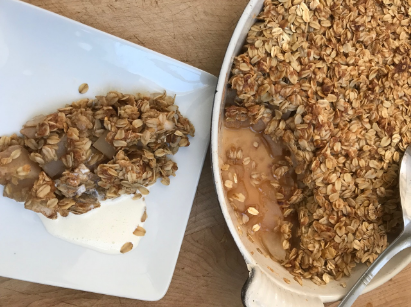
Now, all showered and in warm clothes, they’d joined the others in a meal of beef stew and warm apple crisp with thick cream. Comfort foods that rarely failed in their one great task.”

kingdom of the blind beef stew

Beef Stew

Serves 6
Preparation Time: 20 minutes
Cooking Time: Approximately 1 1/2 hours

INGREDIENTS:

  • 1 kg (2 lb 3 oz) beef stew, cut into 2.5 cm (1 in) cubes
  • 1 onion, cut into thin rings
  • 15 g (1 tbsp.) butter
  • 15 mL (1 tbsp.) olive oil
  • 30 g (4 tbsp.) flour
  • 250 mL (1 cup) red wine
  • 125 mL (1/2 cup) veal stock or meat broth
  • 2 stalks celery, chopped
  • 3 large carrots, sliced
  • ½ kale, core removed, thinly sliced
  • 10 medium potatoes, cut into cubes
  • salt and pepper

DIRECTIONS:

  • In a casserole dish, over medium heat, brown the meat and onion in the butter and oil for 5 minutes.
  • Sprinkle with flour and mix. Pour in the red wine and veal stock.
  • Season with salt and pepper. Cover and simmer over low heat for 1 hour.

  • Then add celery, carrot and cabbage on top. Cover again and cook until vegetables are tender, about 30 minutes.

kotb

Apple Crisp with Thick Cream

Serves 4
Prep Time: 15 minutes
Cooking Time: 35 minutes

INGREDIENTS:

  • 675 g (1 1/2 lbs) Cortland or McIntosh apples, peeled, seeded and diced
  • 150g (3/4 cup) brown sugar
  • 90g (1/3 cup) unsalted butter, tempered
  • 55g (1/3 cup) unbleached all-purpose flour
  • 250 g (1 cup) rolled oats
  • A pinch of salt
  • 250ml (1 cup) heavy cream

DIRECTIONS:

  • Preheat oven to 180°C (350°F). Butter a square pan of about 17 cm (7″).
  • In a bowl, mix the apples with half the brown sugar. Place in pan.
  • In the same bowl, mix remaining brown sugar with butter, flour, oats and salt. Cover the apples with the crisp.
  • Bake for 35 minutes or until crisp is golden and apples are cooked.
  • Serve warm, pouring heavy cream over the crisp.
Categories
Uncategorized

Glass Houses: Shepherd’s Pie

“Getting up to prepare the shepherd’s pie, comfort food for their dinner, Gabri suspected his guests would find very little peace in whatever Gamache discovered. And probably no comfort in the food. As the kitchen filled with the aromas of sautéing garlic and onions and gravy and ground meat browning, he thought about the four friends and the close bond they shared. It had been obvious from that first visit, years earlier…”

glass houses shepherds pie

Shepherd’s Pie

Serves 6 to 8 Prep Time: 20 minutes Cooking Time: 1 hour

INGREDIENTS:

  • 125ml (1/2 cup) olive oil, for cooking
  • 1 onion, chopped
  • 1kg (2lb1/4) ground lamb
  • 2 cloves of garlic, chopped
  • 1 leek, chopped
  • 15ml (1 tbsp.) tomato purée
  • 15ml (1 tbsp.) Worcestershire sauce
  • 125ml (1/2 cup) red wine
  • 250ml (1 cup) chicken broth
  • 2 sprigs thyme, chopped
  • 2 sprigs rosemary, chopped
  • 175g (1 cup) frozen corn
  • Salt and pepper

Mashed potato filling

  • 750g (11/2 lb) potatoes, peeled and cut into pieces
  • 60g (2oz) butter
  • 60ml (1/4 cup) milk
  • 120g (4oz) cheddar cheese, grated

DIRECTIONS:

  1. Preheat oven to 375°F (180°C)
  2. In a frying pan, heat olive oil to brown the chopped onion. Add ground meat until golden brown. Add garlic and cook for 3 minutes. Season with salt and pepper. Set aside on a plate.
  3. Add a little oil to the same pan and fry the leek for 5 minutes over low heat. Add the tomato purée and Worcestershire sauce.
  4. Return the meat to the pan and stir. Pour in the wine and simmer for a few minutes until the wine reduces. Add the chicken broth, thyme, rosemary and corn and simmer for 15 minutes to concentrate the sauce. Adjust the seasoning and let cool.
  5. Prepare the garnish. Cook the potatoes in salted water. Drain and mashed potato.
  6. Add butter, milk, salt, pepper and half the cheese. Mix and cook for 2 to 3 minutes.
  7. Place the lamb mixture in a baking dish measuring approximately 20 cm x 30 cm (8″ x 12″). Spread mashed potatoes on top. Sprinkle with remaining cheese.
  8. Bake for 20 minutes or until shepherd’s pie is gratinated. Serve hot.

Categories
Uncategorized

Cultural Inspirations From Three Pines: All The Devils Are Here

wcag heading

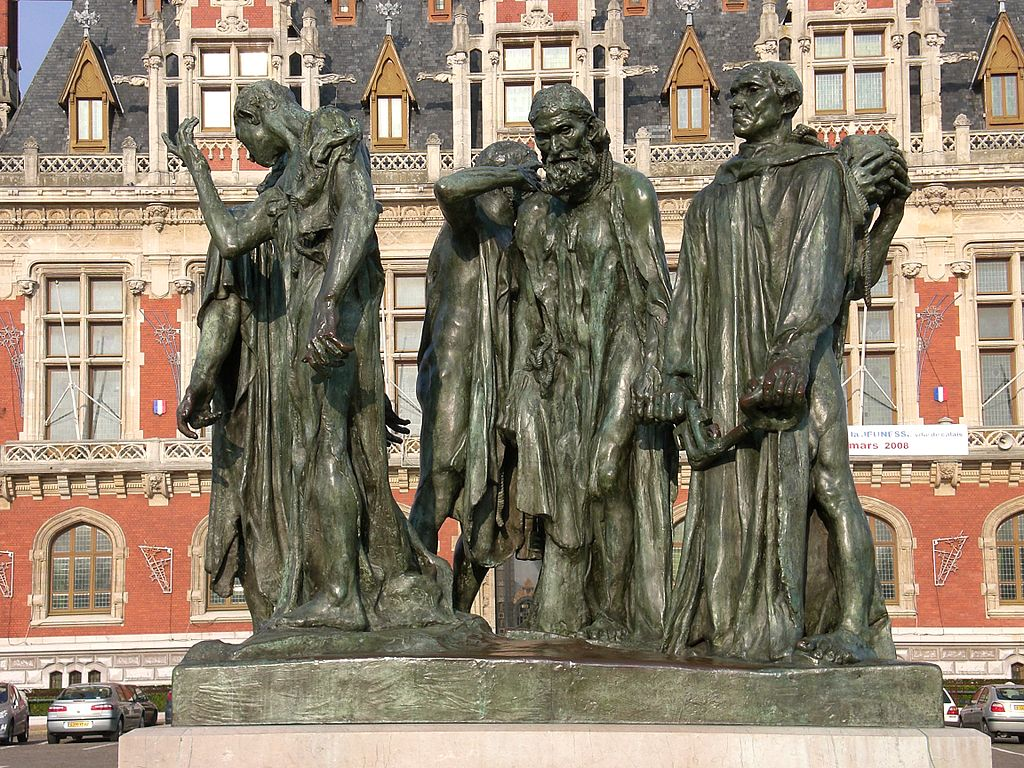
“Eventually, Armand led them back there, and stood transfixed in front of the statue. “The Burghers of Calais,” Stephen had said, his voice hushed, soothing. “In the Hundred Years’ War, the English King, Edward, laid siege to the French port of Calais.”
He looked at Armand to see if he was listening, but there was no indication either way. (All the Devils Are Here, page 5)

Auguste Rodin’s Burghers is made of bronze, measures over six feet in height, length, and width, and was constructed between 1884 and 1889. In Louise’s novel, a young Armand and Stephen Horowitz stand in front of the 1926 cast of the statue that stands in the gardens of the Musée Rodin in Paris. The original cast sits in Calais.

All the devils are here

Rodin’s work depicts the imminent destruction of Calais by the English forces during the 100 Year War. As Stephen describes to Gamache, “Just as complete catastrophe threatened, King Edward did something no one expected. He decided to have mercy on the people of Calais. But he asked one thing. He’d spare the town if the six most prominent citizens would surrender. He didn’t say it exactly, but everyone knew they’d be executed. As a warning to anyone else who might oppose him. They’d die so that the rest could live.”

But, in a complete twist of fate, the English spared the Burghers in the end!

What actually happened that fateful day in 1346 is up for conjecture but clearly it’s the selflessness of the act that Louise is illustrating here and putting forth not one, but two questions to all of us:

Would you give up your life for your family?

Would you give up your life for total strangers?

Categories
Uncategorized

Cultural Inspirations From Three Pines: A Better Man

wcag heading

“Clearly the Sûreté doesn’t think you’re much use, or you wouldn’t be back here.
And don’t get me started on what they’re saying on Twitter, the dumb-asses. Not that I disagree.”
“Ruth!” said Reine-Marie.
“What? It’s the truth.”
“All truth with malice in it,” said Armand.
“But still the truth,” said Ruth.
Reine-Marie walked Armand to the door. “That was from Moby-Dick, wasn’t it?”
(A Better Man, page 115)

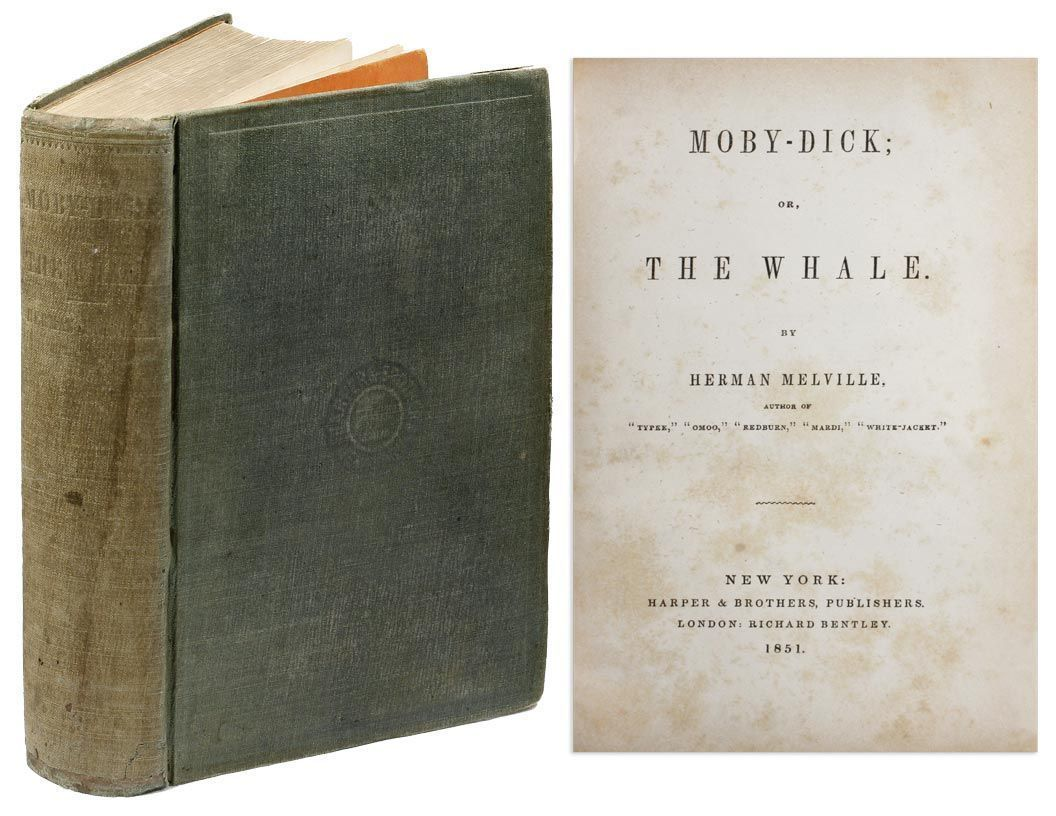
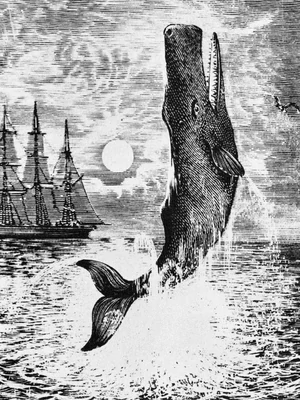
The quote does indeed come from Moby-Dick. It appears in Chapter 42 of the novel that Carl Van Doren called the “pinnacle of American Romanticism” and Louise levels its importance by citing it no less than eight times throughout the novel.

A Better Man

Near the end of A Better Man, Gamache pontificates on Melville’s meaning, saying that the quote is “About human nature… About obsession. About allowing rancor to cloud judgment. About what happens when we see the malice but fail to see the truth.” As the novel centers on social media and the truths, half-truths, and lies that pervade its platforms, Gamache’s interpretation of the quote is quite apt.

A Better Mans 2

While Melville uses the quote in describing the madness of Ahab, it’s interesting to note Ahab’s polar opposite, Ishmael – think Louise’s running theme of good verse bad, light verse dark – and how his own characteristics parallel that of Gamache; both, at the heart of it, are part philosopher, part mystic.

Call me Ishmael.
Call me Armand.

Categories
Uncategorized

Cultural Inspirations From Three Pines: Kingdom of the Blind

wcag heading

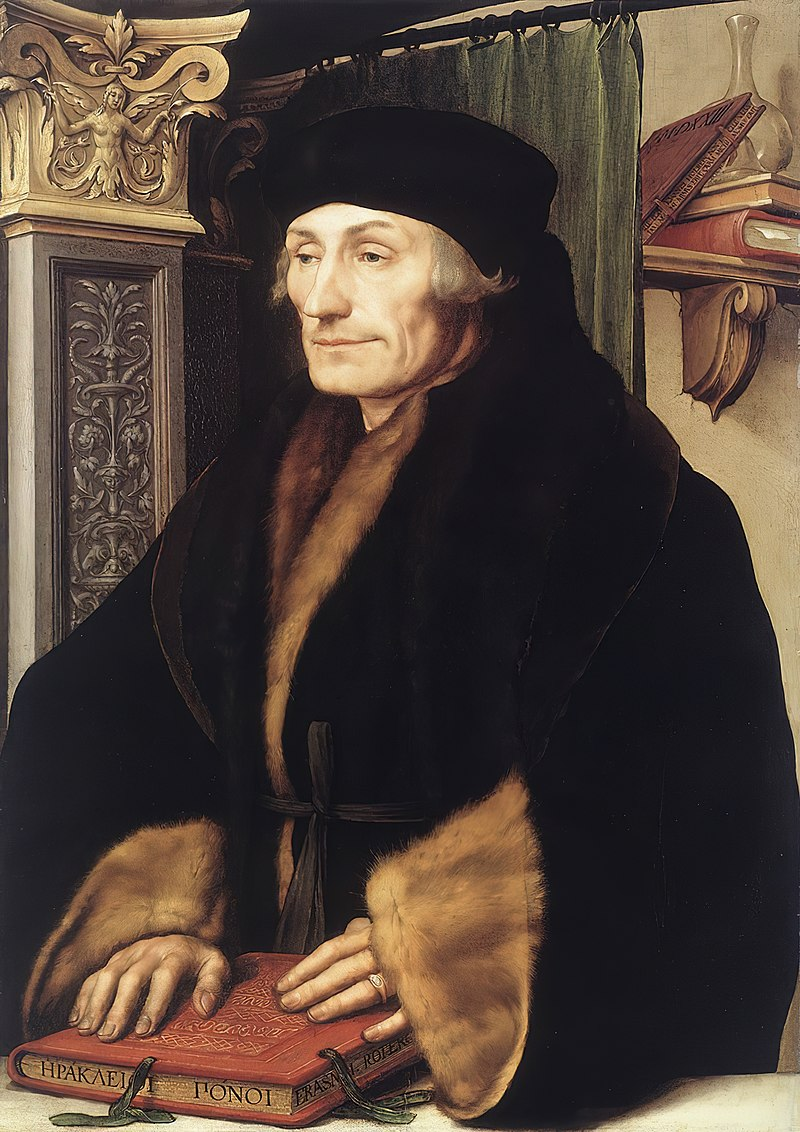
“After sliding back into the booth and ordering coffee and a sandwich, Armand put on his reading glasses and opened the book he’d bought that morning at Myrna’s bookshop. Erasmus’s Adagia. His collection of proverbs and sayings.” (Kingdom of the Blind, page 179)

From the Adagia, we get perhaps Erasmus’ most famous line, and the basis for the title of Louise Penny’s 14th novel: “in the land of the blind, the one-eyed man is king.” Although Erasmus almost certainly cribbed the quote from Genesis Rabbah, a Judaic text that dates to around 300 CE, it is he who is credited with the proverb.

Kingdom of the Blind

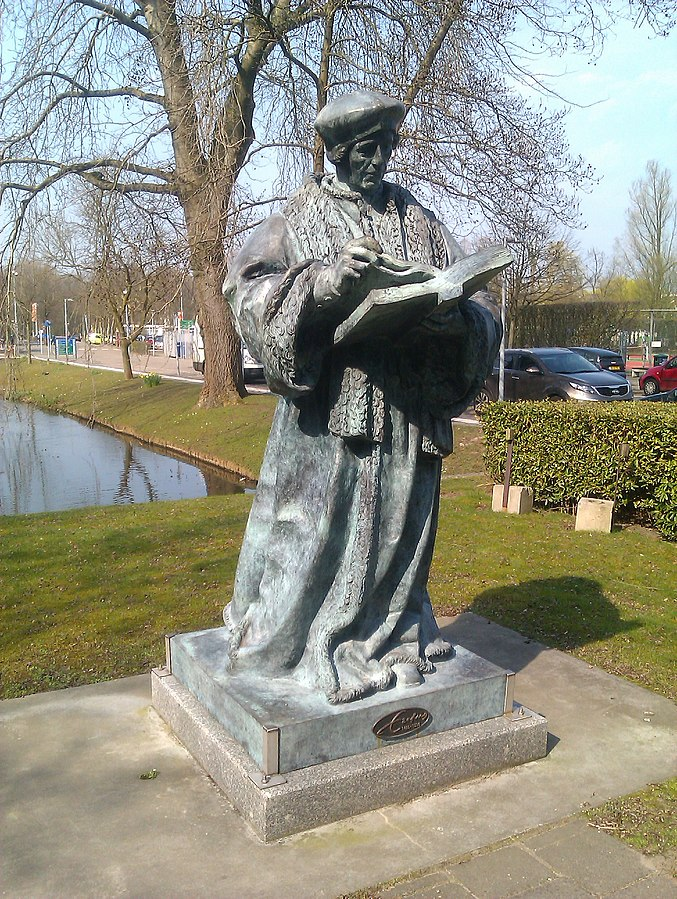
Desiderius Erasmus was born in Rotterdam in 1466 and is considered one of the greatest scholars of the northern Renaissance. Erasmus’ parents both fell victim to the Plague, so it’s curious to note that Louise uses the “plague” to describe the opioid epidemic that haunts Gamache throughout the novel.

Erasmus, like our beloved Gamache, was a true Renaissance man. He was a theologian, a philosopher, and a prodigious writer who, while alive, was responsible for roughly 20 percent of all books sales in Europe.

Kingdom of the Blind 2

And, it was Erasmus who said, “When I get a little money I buy books; and if any is left, I buy food and clothes.”

A phrase all of us can certainly identify with!

Categories
Uncategorized

Cultural Inspirations From Three Pines: Glass Houses

wcag heading

“So,” said Gamache, looking at Matheo. “Are you considering bringing the cobrador del frac to Québec? Are you asking me if it would be legal?”

Matheo and Lea stared at Gamache, then Matheo laughed.

“Good God, no. I’m showing you this because Lea and I think that that”—he pointed out the window—“is a cobrador del frac.”

“A debt collector?” asked Gamache, and felt a slight frisson. Like the warning before a quake. (Glass Houses, page 54)

From its original Spanish, cobrador del frac translates as “The Dress-Coat Collector.” And as Mateo says in the novel, they’re not what they appear.

Beauvoir goes on to explain that the cobrador has its roots in the 1300s during the Spanish Inquisition when “lepers, the insane, babies who were born with deformities….those suspected of being witches” were exiled to La Isla del Cobrador. Those strong enough to survive their banishment returned – now cloaked – to torment the people who had expelled them.

And this is what the denizens of Three Pines are dealing with in Glass Houses, the indigeneuos cobrador. “The del frac was added much later by some clever marketer. But this is the real thing. The original,” says Jean-Guy.

Founded by that clever marketer in the 1980’s, a Cobrador del Frac’s sole focus is to humiliate debtors into paying their bills. They accomplish this mission – dressed in topcoats and tails – by literally stalking the insolvent around Spain until they’re so utterly humiliated that they pay up.

Glass Houses

El Cobrador del Frac has over 500 employees across Spain and Portugal and the tuxedo-clad collectors are all men, as women are “not deemed imposing enough”.

Clearly the Cobrador del Frac has never met Ruth!

Categories
Uncategorized

The Real Places Of Three Pines: The Madness of Crowds

wcag heading

“Why not?”
“Don’t you find it curious that while all her other lectures were out west, when she does come east, it’s not to the University of Toronto. Not to McGill or the Université de Montréal. Not to a big venue in a major city, but to a small university in a small town.”
“The Université de l’Estrie has a very good reputation,” said the Chancellor.

“C’est vrai,” he said, nodding. “It’s true. But it’s still surprising.” (Pg. 26-27)

There are three English-taught Universities in Québec. McGill and Concordia, both well-known institutions, are both in Montreal. The third, Bishop’s University in Sherbrooke (perhaps the model for the University in The Madness of Crowds?) is the lesser known of the trio.

The Madness of Crowds

Founded in 1843, the University set out “to offer the country a sound and liberal education” and focuses on “fine arts, humanities, social sciences, natural sciences, business and education”. While relatively small, with just under 3000 students, Bishop’s was named Canada’s number-two party school in 2021. Can’t imagine there are many keg parties in Three Pines, though!

Despite its modest size, Bishop’s has produced some amazing alumni:

Galt MacDermot, known as “the man behind the music of the 1960s mega-musical Hair”. He gave us the title track and Aquarius/Let the Sunshine In!

Jake Eberts, who produced the films Chariots of Fire, Dances with Wolves, and Chicken Run. Without Chariots and Dances there is no Chicken.

Michael Ondaatje, Booker Prize-winning author of The English Patient. And fun fact: Michael’s brother Christopher represented Canada in the four-man Bobsled at the 1964 Olympics.

Cameron Hughes, who is actually employed by sports teams to pretend to be just a regular fan, but then excites the crowd to get them into the game. Not sure what he majored in at Bishop’s, but that’s some job!

The Madness of Crowds 2

Categories
Uncategorized

The Real Places Of Three Pines: All The Devils Are Here

wcag heading

“Hell is empty, Armand,” said Stephen Horowitz.
‘You’ve mentioned that. And all the devils are here?’ asked Armand Gamache.
‘Well, maybe not here, here’—Stephen spread his expressive hands—’exactly.’
‘Here, here’ was the garden of the Musée Rodin, in Paris, where Armand and his godfather were enjoying a quiet few minutes. Outside the walls they could hear the traffic, the hustle and the tussle of the great city.

But here, here, there was peace. The deep peace that comes not just with quiet, but with familiarity.
With knowing they were safe. In the garden. In each other’s company.”
(Pg. 1)

Originally opened in 1919, the Musée Rodin is located at 77 rue de Varenne in what was the Hôtel Biron. Among the many works displayed in the Musée is arguably Auguste Rodin’s most famous sculpture, The Gates of Hell, which features the all-too-familiar figure of The Thinker.

All Devils are here

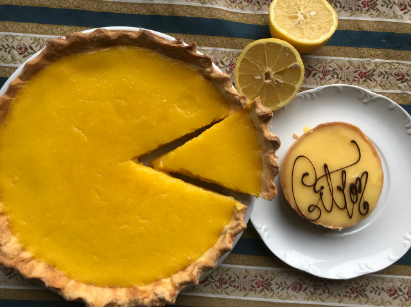
The sculpture – a work that Rodin tinkered with for nearly 40 years and up until the time of his death – plays a major role in the novel. Among other events, it’s where Armand and Stephen sit, at the beginning of the novel, to eat their tartelettes au citron.

The Gates were inspired by Dante’s Inferno of which Rodin said, “For a whole year I lived with Dante, with him alone, drawing the eight circles of his inferno…” He then translated his vision, driven by Dante’s dire warning – Abandon every hope, who enter here – into the massive bronze sculpture that measures nearly 20 feet high and over 13 feet wide.

All Devils are here 2

After spending time contemplating The Gates of Hell – if you haven’t given up hope! – you must venture into the Musée where you’ll not only find more sculptures but thousands upon thousands of drawings and photographs from the rightful heir to Michelangelo who once said, “The main thing is to be moved, to love, to hope, to tremble, to live…”

Trinquons à ça!

Categories
Uncategorized

The Real Places Of Three Pines: A Better Man

wcag heading

“There were few things more powerful, or destructive, or terrifying, than a hungry bear or a river in full flood.
Gamache knew exactly where the river was heading. While he’d never been along this road before, he knew the area. They weren’t all that far from his own village.
Which meant the roar they heard was the Rivière Bella Bella, heading straight into Three Pines.” (A Better Man, pg. 50-51)

Coldbrook is the stream that runs through the center of Knowlton and empties into Brome Lake. In fact, Knowlton was originally named Coldbrook when it was settled in 1802 by Loyalists from New England and New York.

BtterMan

The Coldbrook is flanked by history and a walk in downtown Knowlton is a trip into the past. Look for the ghosts of Israël England, who built the tannery in 1843, and namesake Paul Holland Knowlton, who constructed the first gristmill in 1836. Both structures are now gone but one can still see the foundation of the tannery and the millstone from the gristmill is located in Coldbrook Park.

A stone’s throw from the stream is the Pettes Memorial Library which opened its doors in 1894 and was the first free rural public library in Québec and the Partridge Building where the H.F. Smith Printing Company operated from 1899 to 1943.

After a day exploring around the banks of the Coldbrook one must simply stop at Auberge Knowlton. Built in 1849 and the oldest hotel in the Eastern Townships, the Auberge houses the Bistro Le Relais, where the Jarrets d’agneau is to die for!

Better

Categories
Uncategorized

The Real Places Of Three Pines: Kingdom of the Blind

wcag heading

Light snow covered the other vehicle. It had been there, he guessed, for about half an hour. Not more. Then his eyes returned to the farmhouse.
“It’s been a while since anyone lived here.”
It took a long time to fall into such a state. Lack of care, over the years, would do that.
It was now little more than a collection of materials.
The shutters were askew, the wooden handrail had rotted and gone its separate way from the sloping steps. One of the upper windows was boarded up, so that it looked like the place was winking at him. As though it knew something he did not. (Pg. 2)

The Eastern Townships have been called the “Garden of Canadian Agriculture” and rightfully so. The Province leads the country in the cultivation of dairy, pigs, fruits, berries, nuts and – of course – maple sugar, where you’ll find 42.5 million trees tapped. As of 2016, Québec alone accounted for nearly 29,000 working farms covering over 8 million acres.

Here are some must-see farms when visiting the Eastern Townships.

Bleu Lavande in Magog (bleulavande) “is the pioneer of the Québec lavender culture and is one of the largest lavender farms in Canada.”

Kingdom of Blind

Alpacas Sutton (alpagassutton.com) whose mission is to “offer an agritourism experience for animal lovers by opening their doors and sharing the pleasures of raising alpacas in a pristine location.”

Domaine Ives Hill in Compton (eng) “specializes in the cultivation and processing of blackcurrant.”

Miellerie Lune de Miel in Stoke (english report) “offers guided tours of the fascinating world of bees and honey”.

La Cabane du Pic Bois in Brigham (caban) is a classic sugar shack that’s been operated by the Cardin-Pollender family for the past four generations.

Kingdom of Blind 2

The owner of this website has made a commitment to accessibility and inclusion, please report any problems that you encounter using the contact form on this website. This site uses the WP ADA Compliance Check plugin to enhance accessibility.